Eastern Highlands Health District

Eastern Highlands Health District
The EHHD offers a range of resources designed to support healthy communities and promote wellness. Below you will find information on a range of topics. We also conduct communicable disease surveillance to prevent outbreaks. including West Nile Virus, Rabies, and food borne illness.
Mosquito borne diseases
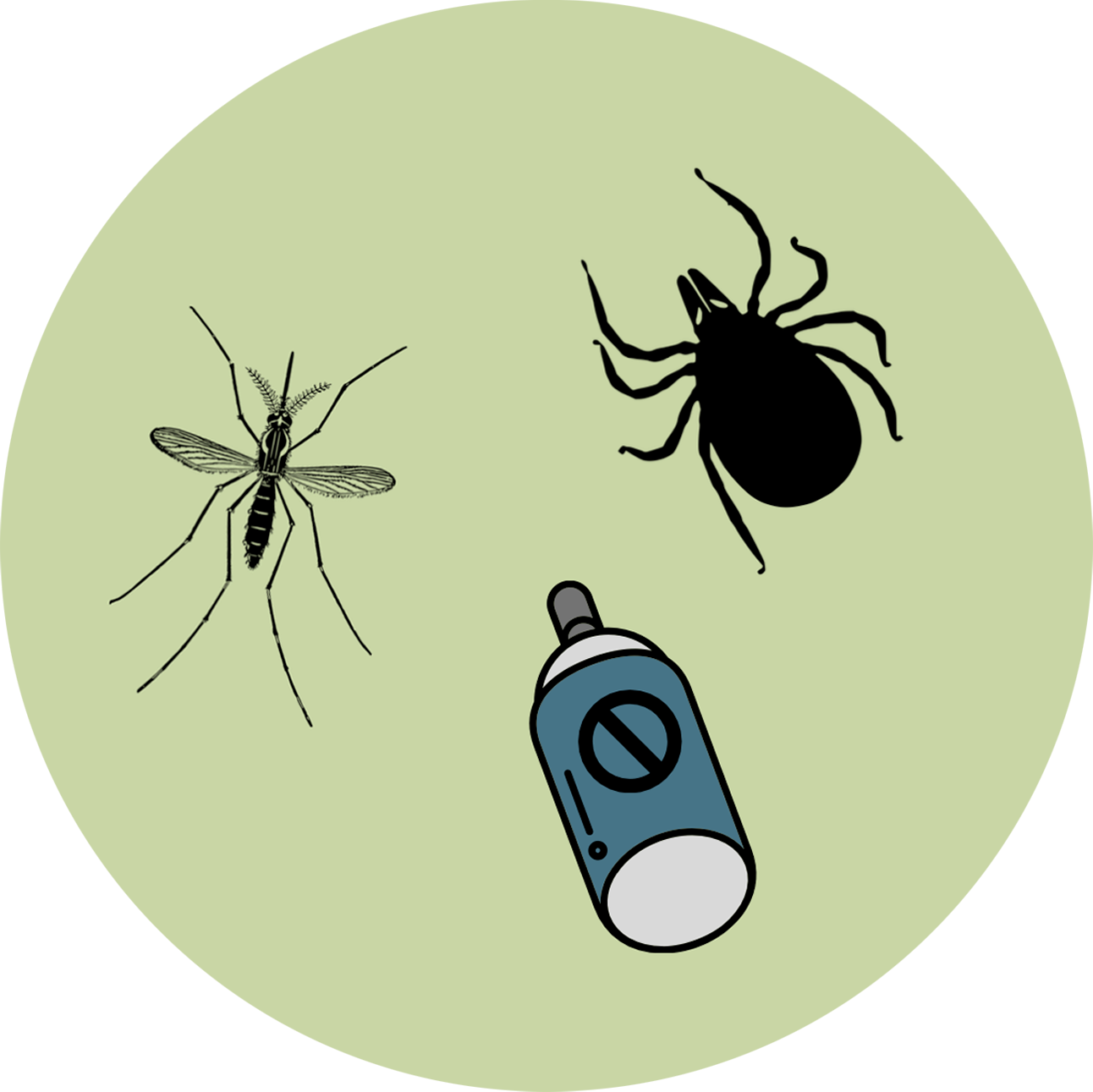
Mosquitoes can transmit numerous diseases, of particular concern in Northeastern Connecticut are Eastern Equine Encephalitis and West Nile Virus. Here is some information on how to protect yourself from mosquito bites from the Centers for Disease Control and Prevention. For information from the State of Connecticut Mosquito Management Program on Protection Against Mosquitoes Using Repellents, click here.
Reduce the chances of being bitten by a mosquito by:
- Wearing protective clothing (long sleeves and pants) and mosquito repellent especially during the cooler hours of the day at dusk and dawn. Note: the most effective repellents contain DEET or Picaridin; this booklet provides more info: Insect Repellent Essentials: A Brief Guide
- Using mosquito netting when sleeping outdoors
- Repairing screens on windows and doors to prevent mosquitoes from entering the house
West Nile Virus
The West Nile virus is an illness that can affect humans and animals. It is spread by the bite of an infected mosquito. There have been reported cases in Connecticut, however, there are several steps you can take to reduce the chances of contracting West Nile Virus. If you suspect you have been infected with West Nile Virus, contact your medical provider.
Reduce the amount of mosquitoes around your home by:
- Eliminating standing water in wheelbarrows, pots, birdbaths and other containers
- Treating pools with the appropriate chemicals and/or drain them when appropriate and use pool covers
- Treating ponds with mosquito dunks to kill any larvae
For more information on how to prevent and/or identify West Nile Virus, please visit the following links:
- Connecticut Department of Public Health: Mosquito-Borne Diseases
- Center for Disease Control: West Nile Virus or West Nile Fact Sheet
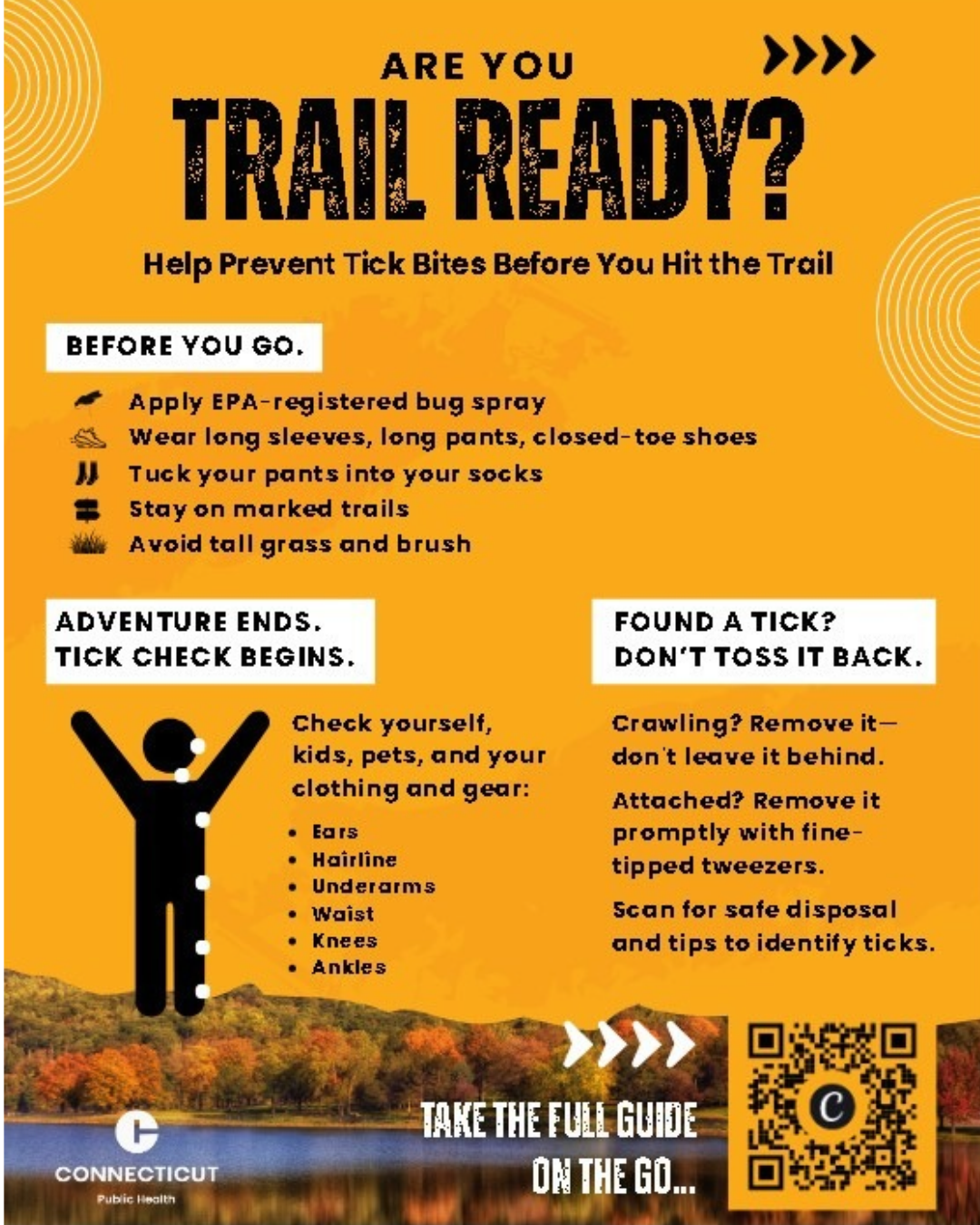
Ticks transmit several diseases of concern in our area. The CDC has many resources regarding tick-borne diseases and prevention on their website: Tick-borne Diseases. Lyme disease was initially identified in Lyme, Connecticut. Caused by bacteria and spread by deer ticks to humans, it can present as a myriad of ailments including an arthritic-type disease. Although if detected early, antibiotics are effective in treating Lyme disease, Connecticut consistently has the highest incidence rate of any state in the nation.
If you or (your child) have been bitten by a deer tick, an engorged tick can be submitted to the Connecticut Agricultural Experiment Station for testing at no charge. Please be aware that they will primarily be testing ‘engorged’ ticks, and results often take up to four weeks to receive.
Tick Testing
- Tick Testing Submission Form
- UCONN Pathology Testing Labs in Mansfield
EHHD resources on Lyme Disease can be found here:
Influenza
Flu Season typically runs from fall through spring each year. The best way to prevent the flu is with an annual flu shot. All vaccines are free in Connecticut for persons under 19 years of age. The Centers for Disease Control and Prevention offers a FAQ web-page to inform you of what’s new with the flu.
Tips to prevent the flu:
- Avoid close contact with sick people
- Wash your hands often with soap and water, or alcohol-based hand rub
- Cover your nose and mouth when you sneeze or cough
- Avoid touching your eyes, nose and mouth as this can spread germs.
Measles
The only way to prevent measles from spreading is to get vaccinated (MMR vaccine). If you have questions about the vaccine or if you are not sure you have received the vaccine, talk to your healthcare provider.
Click below for the CT DPH handouts on the various topics regarding measles and exposure to measles.
Rabies
Rabies is in Northeastern Connecticut, and seeing a potentially rabid animal is a serious matter.
- If you suspect a captured animal has rabies, report the capture to the Health District (or to the local police if after hours).
- Please remember that rabies testing can only be done effectively on the brain of the infected animal, so it is important to not damage the animal’s head.
The Center for Disease Control and Prevention has many resources for understanding rabies at their website, “Questions and Answers About Rabies.
Bats can carry rabies! With the warmer weather, many families and children might find themselves at risk while camping out or attending a residential camp. Even houses and barns in our area have the potential for housing bats. Although many people know to stay away from wild animals that act abnormal, bites and scratches from bats are often so small they go unnoticed. If you see a bat in a room where someone has been sleeping, the bat should be captured without damage to the bat’s head and kept cool.
Some tips from the Connecticut Department of Public Health for safely catching a bat in a room include:
- Wear gloves, and avoid skin contact with the bat
- Confine bat to one room (close doors, closets, and windows)
- Turn on lights in the room
- When the bat lands on a surface, cover with a small container (coffee can, shoe box, plastic bowl, etc)
- Slide a piece of cardboard under the container to capture bat and secure with tape
- Consult a Nuisance Wildlife Control Officer or a veterinarian about euthanizing the animal for testing
Additional information about rabies from the Connecticut Department of Public Health .
Mpox Virus
Mpox infections were first reported in May 2022 worldwide and in the US.
This virus is related to smallpox and causes an infectious rash of blisters that can appear anywhere on the body. Other typical symptoms include fever, headache and fatigue. It is rarely fatal but highly contagious.
Mpox can spread by direct physical contact with the rash, contact with infected personal belongings like clothing, or respiratory droplets.
While the risk of getting Mpox is low, those who have been in close contact with someone with the virus should take steps to protect themselves such as testing, masking, and limiting contact with others.
The best protection against Mpox for those at risk is a vaccine. Learn more about the vaccine and how ‘at risk’ individuals can get a vaccine. You can also visit the CDC Mpox Webpage.